
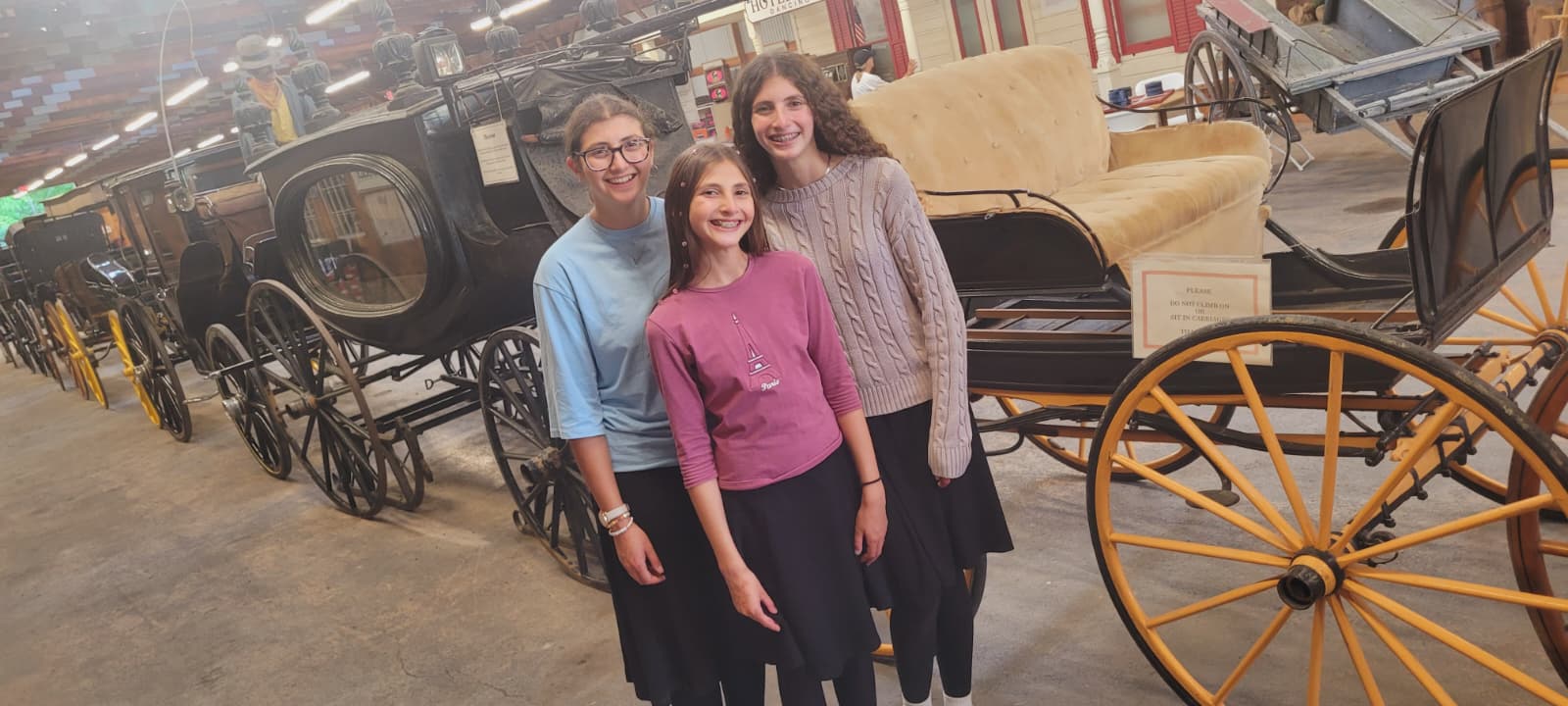
 My daughters at the long line of wagons and coaches in the historic museums at the Altamont Fair reminded me this beloved childhood story titled “Reb Yosef the Coachman”. You can read the children’s version here “The Coachman” on Chabad.org. It’s an old classic. The Friediker Rebbe, Rebbe Yosef Yitzchak, writes the story as a background introduction to the Mitteler Rebbe’s Sefer “Pokeach Ivrim”.
You can read the full story at the link above. It’s about a scholarly Jew already midlife who was once told by the Alter Rebbe “for the sake of your soul, it’s better to be a coachman than a rabbi.” This was totally not what Reb Yosef expected, it was not his line of work and was very much not his speed. He kept this to himself until a rabbinic offer came his way and he turned it down. When his wife heard the reason, she encouraged him to follow the Rebbe’s advice, even selling her jewelry to purchase the horse and wagon and accessory equipment. This was a great adjustment for him, a physical and emotional struggle, but she was strong and confident in fulfilling the Rebbe’s wishes.
The climax of the story happens on one of his journeys, where he ends up in a roadside inn to stay the night. He’s introduced to a Solomon Gametzki, an estranged Jew who has a high position working for a nobleman, and needs a ride out first thing in the morning. Reb Yosef agreed to take him, he was seasoned coachman by this time, but insisted on first praying the morning prayers. Solomon wants nothing of the sort, and he makes arrangements with another driver. They both turn in for the night, and turns out they have adjacent rooms. Reb Yosef prays and sings, and puts his heart and soul into it, and his next door neighbor’s soul is stirred and awakened, and he decides to go with Reb Yosef after all. But instead of his destination, they journey to the Mittler Rebbe, for the Alter Rebbe has since passed away, who prescribes a path of repentance and personal growth to Solomon, who ends up a Chassid. The Mittler Rebbe tells Reb Yosef that the wagon-driver mission has been fulfilled and now he can go back and become a rabbi.
Our visit to the Altamont Fair and seeing that long line of wagons and coaches triggered my memory of this story. But it’s also an important message for all of us. We all find ourselves in places or situations where we can be an inspiration or assistance to someone else. Perhaps that’s our whole purpose of being there altogether! As the Baal Shem Tov taught, and popularized in a beloved Chabad camp song: “For 70 or 80 years, a Neshoma wear and tears, just to do a favor for another!”